
Loading…
Keep teaching when named storms close Oxford—VLE design as continuity, not a Moodle badge.
Online or on campus

Continuity in higher education is usually a PDF nobody reads until Storm something-or-other arrives. This PGCert starts with named British weather and transport failure as design constraints. You will specify what happens to a live seminar, an identity-checked exam, and a library hold when the city stops. Dual-pathway parity is the point: online students should not become second-class when campus reopens, and campus students should not be abandoned when they cannot travel. Faculty mark whether your VLE structure is navigable on a phone in a power cut’s aftermath, not only on a desktop in August. The award is not civil-contingencies officer status and not a Moodle/Canvas certificate. Capstones are continuity playbooks plus VLE information architecture for a named dual-pathway programme. Oxfordium University is an Oxford dual-pathway provider; weather and transport failure are not exotic scenarios. Faculty mark whether your navigation still works on a phone after a closure notice, and whether campus return does not demote students who remained online. The PGCert is not an ITIL ticket and not civil-contingencies officer status. It is academic continuity design for people who already keep teaching when the Forth is uncrossable. PGCert Storm Continuity and VLE Design is taught as one award, not a list of unrelated modules. The published length is 9 months, and the credit total is 15. Students move from Named Storms, Transport, and Campus Closure through Named Storms, Transport, and Campus Closure; Power, Broadband, and Student Location Risk; Information Architecture for Anxious Weeks; Moving Identity-Checked Exams without Chaos; Estates, IT, and Academic Governance Interfaces, and finish on Estates, IT, and Academic Governance Interfaces. Each course has a question, a method, and a submission. In this field, students apply the method of the subject to a defined problem and defend the result. Reading is a core text, a case or dataset, and a critique. The artefact a marker expects is a submission that shows the method, the evidence, and the limit of the claim. The award is built so that a graduate can do the following in practice: Write a storm/transport continuity playbook for dual-pathway teaching Design VLE structure that remains navigable under disruption Protect identity-checked assessment windows without panic Teaching assumes the student can read a source, attempt a problem before the seminar, and revise after feedback. Attendance at live seminars is part of the design. The capstone or final course must use the methods of the earlier courses; a project that ignores them does not pass. The pages for each course name the topics that are examined. Those topics are the syllabus. A brochure line is not a substitute for them.
Fifteen credits, nine months: storm and transport continuity, VLE information architecture, assessment windows, and a supervised playbook. Dual pathway. No vendor logos.
Study online
Online tuition is free. Online examinations and certificates are 100% free and sponsored.
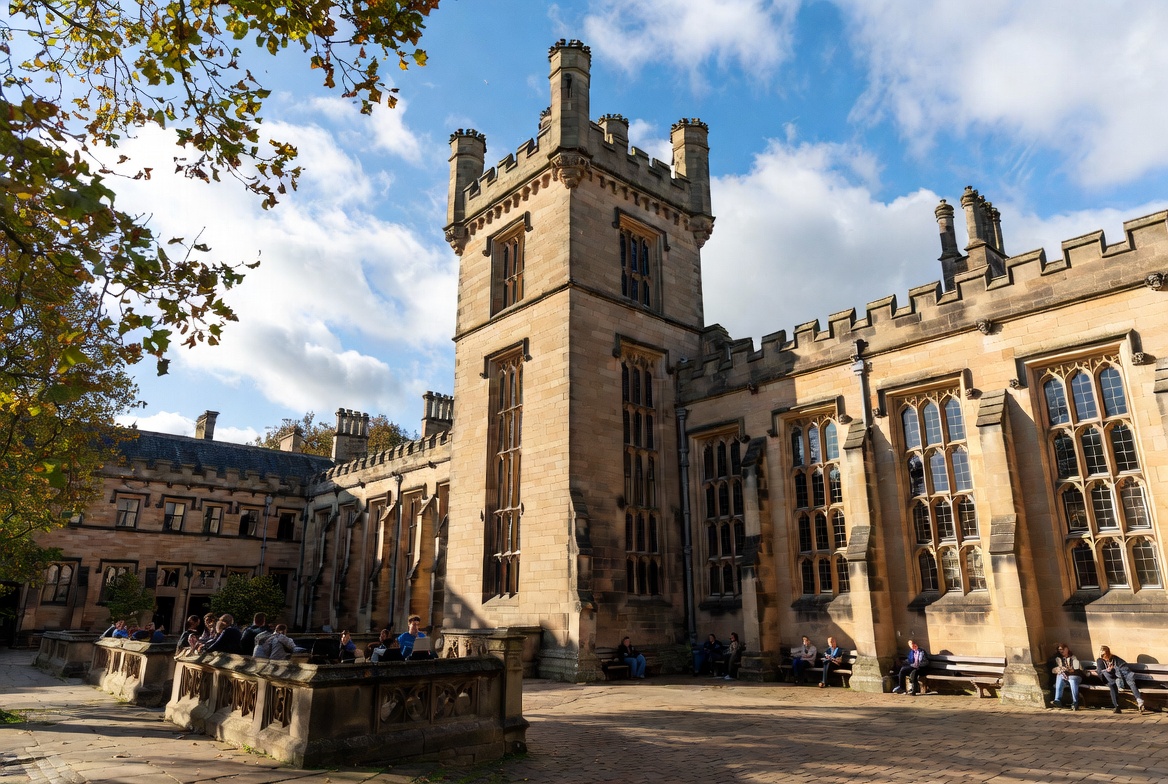
On-campus study
Prefer to learn at our Oxford campus? Campus tuition is published on each programme page. All examinations are 100% free of charge.
| Code | Course | Credits · hours |
|---|---|---|
| UOB761 | Named Storms, Transport, and Campus Closure Named Storms, Transport, and Campus Closure (UOB761) is a course on PGCert Storm Continuity and VLE Design. It carries 15 credits and 150 notional learning hours, at 10 hours per credit. The course is a professional certificate module. The submission is a workplace artefact a marker can check against the chapters. The chapters are the syllabus. Each chapter is a class of work this course assesses. Preparation is the reading, dataset, or case for that chapter. Seminar time is spent on the decision, the calculation, or the draft. The student revises after feedback. A pass requires the method named in the chapters, evidence a marker can check, and a stated limit on what the result does not show. The course is offered at the Oxford campus on Holywell Street and online.
| 15 · 150 h |
| UOB762 | Power, Broadband, and Student Location Risk Power, Broadband, and Student Location Risk (UOB762) is a course on PGCert Storm Continuity and VLE Design. It carries 15 credits and 150 notional learning hours, at 10 hours per credit. The course is a professional certificate module. The submission is a workplace artefact a marker can check against the chapters. The chapters are the syllabus. Each chapter is a class of work this course assesses. Preparation is the reading, dataset, or case for that chapter. Seminar time is spent on the decision, the calculation, or the draft. The student revises after feedback. A pass requires the method named in the chapters, evidence a marker can check, and a stated limit on what the result does not show. The course is offered at the Oxford campus on Holywell Street and online.
| 15 · 150 h |
| UOB581 | Practice foundations in Storm Continuity and VLE Design Practice foundations in Storm Continuity and VLE Design (UOB581) is a course on PGCert Storm Continuity and VLE Design. It carries 15 credits and 150 notional learning hours, at 10 hours per credit. The course is a professional certificate module. The submission is a workplace artefact a marker can check against the chapters. The chapters are the syllabus. Each chapter is a class of work this course assesses. Preparation is the reading, dataset, or case for that chapter. Seminar time is spent on the decision, the calculation, or the draft. The student revises after feedback. A pass requires the method named in the chapters, evidence a marker can check, and a stated limit on what the result does not show. The course is offered at the Oxford campus on Holywell Street and online.
| 15 · 150 h |
| UOB582 | The core method of Storm Continuity and VLE Design The core method of Storm Continuity and VLE Design (UOB582) is a course on PGCert Storm Continuity and VLE Design. It carries 15 credits and 150 notional learning hours, at 10 hours per credit. The course is a professional certificate module. The submission is a workplace artefact a marker can check against the chapters. The chapters are the syllabus. Each chapter is a class of work this course assesses. Preparation is the reading, dataset, or case for that chapter. Seminar time is spent on the decision, the calculation, or the draft. The student revises after feedback. A pass requires the method named in the chapters, evidence a marker can check, and a stated limit on what the result does not show. The course is offered at the Oxford campus on Holywell Street and online.
| 15 · 150 h |
| UOB583 | Records and evidence in Storm Continuity and VLE Design Records and evidence in Storm Continuity and VLE Design (UOB583) is a course on PGCert Storm Continuity and VLE Design. It carries 15 credits and 150 notional learning hours, at 10 hours per credit. The course is a professional certificate module. The submission is a workplace artefact a marker can check against the chapters. The chapters are the syllabus. Each chapter is a class of work this course assesses. Preparation is the reading, dataset, or case for that chapter. Seminar time is spent on the decision, the calculation, or the draft. The student revises after feedback. A pass requires the method named in the chapters, evidence a marker can check, and a stated limit on what the result does not show. The course is offered at the Oxford campus on Holywell Street and online.
| 15 · 150 h |
| Code | Course | Credits · hours |
|---|---|---|
| UOB765 | Information Architecture for Anxious Weeks Information Architecture for Anxious Weeks (UOB765) is a course on PGCert Storm Continuity and VLE Design. It carries 15 credits and 150 notional learning hours, at 10 hours per credit. The course is a professional certificate module. The submission is a workplace artefact a marker can check against the chapters. The chapters are the syllabus. Each chapter is a class of work this course assesses. Preparation is the reading, dataset, or case for that chapter. Seminar time is spent on the decision, the calculation, or the draft. The student revises after feedback. A pass requires the method named in the chapters, evidence a marker can check, and a stated limit on what the result does not show. The course is offered at the Oxford campus on Holywell Street and online.
| 15 · 150 h |
| Code | Course | Credits · hours |
|---|---|---|
| UOB769 | Moving Identity-Checked Exams without Chaos Moving Identity-Checked Exams without Chaos (UOB769) is a course on PGCert Storm Continuity and VLE Design. It carries 15 credits and 150 notional learning hours, at 10 hours per credit. The course is a professional certificate module. The submission is a workplace artefact a marker can check against the chapters. The chapters are the syllabus. Each chapter is a class of work this course assesses. Preparation is the reading, dataset, or case for that chapter. Seminar time is spent on the decision, the calculation, or the draft. The student revises after feedback. A pass requires the method named in the chapters, evidence a marker can check, and a stated limit on what the result does not show. The course is offered at the Oxford campus on Holywell Street and online.
| 15 · 150 h |
| Code | Course | Credits · hours |
|---|---|---|
| UOB773 | Estates, IT, and Academic Governance Interfaces Estates, IT, and Academic Governance Interfaces (UOB773) is a course on PGCert Storm Continuity and VLE Design. It carries 15 credits and 150 notional learning hours, at 10 hours per credit. The course is a professional certificate module. The submission is a workplace artefact a marker can check against the chapters. The chapters are the syllabus. Each chapter is a class of work this course assesses. Preparation is the reading, dataset, or case for that chapter. Seminar time is spent on the decision, the calculation, or the draft. The student revises after feedback. A pass requires the method named in the chapters, evidence a marker can check, and a stated limit on what the result does not show. The course is offered at the Oxford campus on Holywell Street and online.
| 15 · 150 h |
Modules are assessed through a published mix of coursework, applied projects, and examinations. Exam windows are announced in advance so students in other time zones are not forced into overnight sittings. Alternative arrangements are available where documented.
The published duration is 9 months. Teaching language: English (dual pathway: Oxford campus or tuition-free online; one academic standard). Actual time-to-complete depends on mode and any recognised prior learning.
You may study this award fully online from your country, or — where published — on campus at Oxfordium. Online study does not require a student visa. Campus study may.
Degree tuition for this award is published as £0 / tuition-free on the online pathway. All online degree examinations and certificates are 100% free and sponsored — the only cost for online study is the application fee. Campus tuition and campus examinations are charged separately. Check the Fees page for details.
Requirements are grouped on this page (academic, English, documents). Equivalent qualifications are considered. The requirement is waived when English is your mother tongue.
Assessment is typically a mix of coursework, projects, and examinations. Doctoral awards include a thesis or dissertation and an oral examination. Details sit in the programme specification and module outlines.
Recognition of the award for local employment, professional licence, or ministry attestation is decided by your employer or regulator. Oxfordium University publishes verification pages for certificates. We do not claim automatic equivalence in every country.
Start an application on this website. Progress is saved from the first step. Admissions: [email protected].
Recognised & Accredited